Dali: Return to Sport After Complex Joint Injury
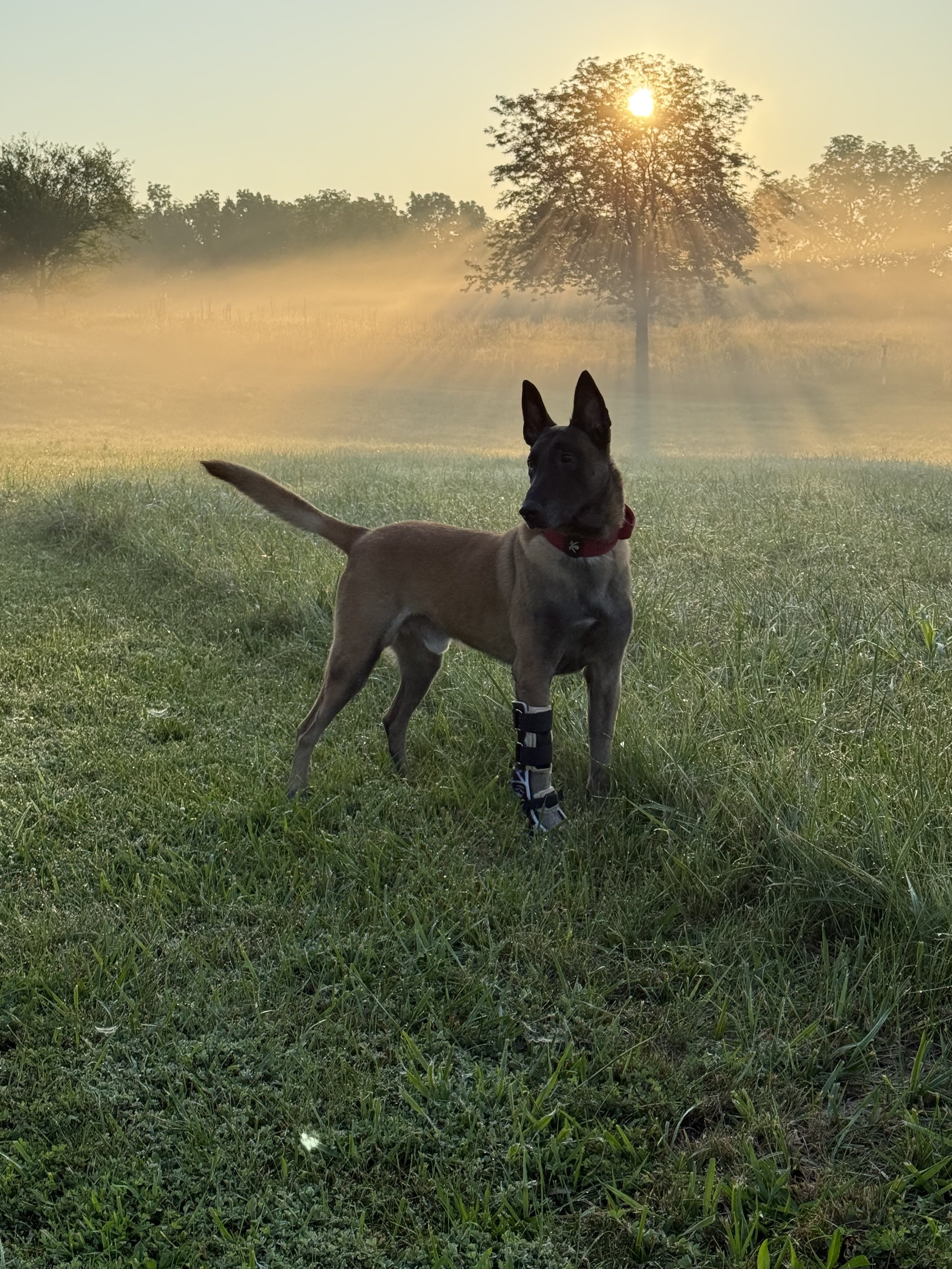
Dali, a 6-year-old male Belgian Malinois, was a highly driven working dog competing in IGP—a demanding sport that tests tracking, obedience, and protection skills. The sport requires strength, agility, and precise athletic performance.
On May 12, 2025, Dali sustained a traumatic injury to his right fourth metacarpophalangeal. When he presented to an orthopedic specialist, he was severely lame (6/6) with significant pain on palpation. Initial treatment, including intra-articular triamcinolone acetonide, resulted in only minimal improvement. A CT was performed with no significant findings. His lameness gradually improved to a 2/6, but persistent discomfort and subtle joint instability remained.
Amputation of the digit was discussed, but the owner, a veterinarian, hoped to find a way to avoid amputation and still return to sport.
Dali was referred to Veterinary Rehabilitation Services of Virginia for diagnostic ultrasound. The exam was performed on June 23, 2025 and identified a collateral ligament avulsion of the right fourth metacarpophalangeal joint — an uncommon injury with limited documented guidance for treatment and return to sport.
Given the instability and Dali’s athletic goals, surgical intervention was pursued. On July 9, 2025, the damaged ligament was debrided and repaired, restoring stability to the joint. Post-operative management included cast immobilization followed by a structured transition into a carpal brace.
Rehabilitation played a central role in Dali’s recovery and was carefully progressed through four phases:
Phase I: Brace Adaptation
Early therapy focused on comfort, controlled mobility, and maintaining strength in the upper limb. Exercises emphasized range of motion, weight shifting, and foundational strength while Dali adapted to brace use.
Phase II: Remobilization
As healing progressed, therapy shifted toward restoring joint mobility and soft tissue function. Modalities including therapeutic ultrasound, shockwave therapy, and joint mobilization were incorporated to support tissue healing and improve flexibility.
Phase III: Strengthening
Progressive strengthening and proprioceptive work were introduced using unstable surfaces, controlled exercises, and underwater treadmill therapy. These interventions helped rebuild stability, coordination, and confidence in limb use.
Phase IV: Conditioning and Return to Sport
Sport-specific conditioning was gradually reintroduced, including tracking and use of IGP equipment. The program was tailored to Dali’s discipline to ensure a safe and effective return to performance.
Through close collaboration between the surgeon, rehabilitation team, and dedicated owner, Dali made an exceptional recovery. He successfully avoided amputation and returned to sport — an outcome that initially carried significant uncertainty given the nature of his injury.
Dali’s case highlights the importance of individualized care, advanced diagnostics, and a collaborative approach when managing uncommon orthopedic injuries. While not every case follows a textbook path, thoughtful planning and teamwork can create opportunities for successful outcomes, even in challenging situations.